
What You Need to Know
Namibia is a sparsely populated Southern African nation known for its vast desert landscapes, political stability, and strong commitment to conservation. Stretching from the Atlantic Ocean deep into the Kalahari Desert, Namibia is defined by dramatic scenery and a rich natural heritage. Long shaped by mining, pastoralism, and regional trade, the country has positioned itself as a leader in sustainable tourism, wildlife management, and democratic governance in Africa.
Namibia at a Glance
Capital: Windhoek
Population: ~2.6–2.7 million
Official Language: English
Government: Presidential republic
Economy: Mining- and services-led with agriculture and tourism
Key Strengths: Political stability, conservation leadership, mineral resources
Regional Role: Stable Southern African democracy and conservation model
Why Namibia Matters
Namibia matters for its success in combining political stability with environmental stewardship. Its community-based conservation programs are globally recognized, demonstrating how wildlife protection can support rural livelihoods and tourism. As a resource-rich country with strong institutions, Namibia offers important lessons in governance, sustainability, and inclusive development.
Geography and Location
Namibia is located in Southern Africa, bordered by Angola and Zambia to the north, Botswana to the east, South Africa to the south, and the Atlantic Ocean to the west.
The country’s geography is dominated by the Namib Desert—one of the world’s oldest deserts—along the coast, the central plateau, and the Kalahari Desert in the east. These landscapes shape settlement patterns, agriculture, and tourism.
People and Society
Namibia has a population of approximately 2.6–2.7 million people and is ethnically diverse. Major groups include the Ovambo, Herero, Nama, Damara, San, and others, each contributing to cultural life.
English is the official language, while Afrikaans, German, and several indigenous languages are widely spoken. Christianity is the predominant religion, often practiced alongside traditional beliefs.
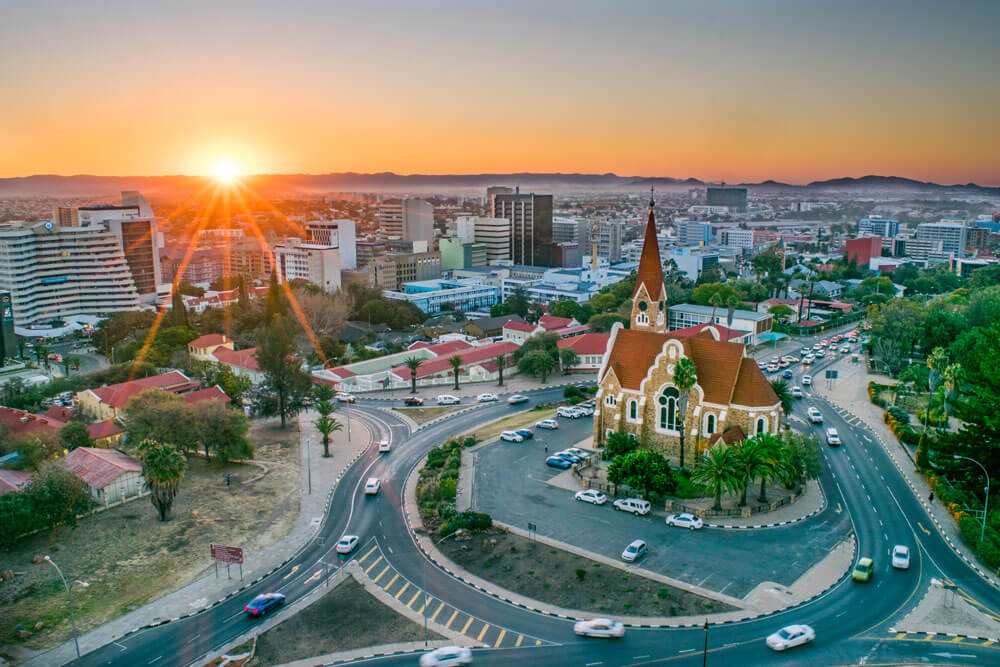
Low population density and high urban concentration characterize Namibian society, with Windhoek as the primary urban center.
A Brief Historical Context
Before colonial rule, Namibia was home to diverse pastoral and hunter-gatherer communities. Germany colonized the territory in the late 19th century, followed by South African administration after World War I.
Namibia gained independence in 1990 after a long liberation struggle, emerging as one of Africa’s youngest nations. Since independence, the country has maintained democratic governance and peaceful political transitions.
Government and Politics
Namibia is a presidential republic with a strong record of democratic stability. Elections are regularly held, and institutions such as the judiciary and electoral bodies are widely respected.
Political debate centers on economic inequality, land reform, and employment, particularly for young people.
Economy: Resources, Tourism, and Sustainability
Namibia’s economy is driven by mining, particularly diamonds and uranium, alongside tourism and agriculture. The country is also investing in renewable energy and green hydrogen initiatives.
Key economic priorities include:
Responsible resource management
Expanding tourism and conservation economies
Developing renewable energy
Addressing inequality and job creation
Economic diversification remains an ongoing goal.
Trade, Diplomacy, and Regional Influence
Namibia is a member of the Southern African Development Community (SADC) and the Southern African Customs Union (SACU). Its ports, particularly Walvis Bay, serve as logistics hubs linking Southern Africa to global markets.
The country plays an active role in regional trade, conservation, and diplomacy.
Tourism and Natural Heritage
Tourism is a cornerstone of Namibia’s economy. Attractions include Etosha National Park, the towering dunes of Sossusvlei, the Skeleton Coast, and Fish River Canyon—one of the world’s largest canyons.
Namibia’s emphasis on eco-tourism and conservation has earned it a global reputation as a premier wildlife destination.
Safety and Travel Considerations
Namibia is generally considered safe for visitors, with well-established tourism infrastructure. Travelers should exercise normal caution, particularly when traveling long distances in remote areas.
Culture and Daily Life
Namibian culture reflects a blend of indigenous traditions and colonial influences. Music, dance, crafts, and storytelling remain important expressions of identity.
Daily life often revolves around community, markets, livestock farming, and urban employment, with strong ties between rural and urban populations.
Sports and National Identity
Football is the most popular sport in Namibia and an important source of national pride. Rugby is also widely followed and reflects the country’s sporting diversity and community spirit.