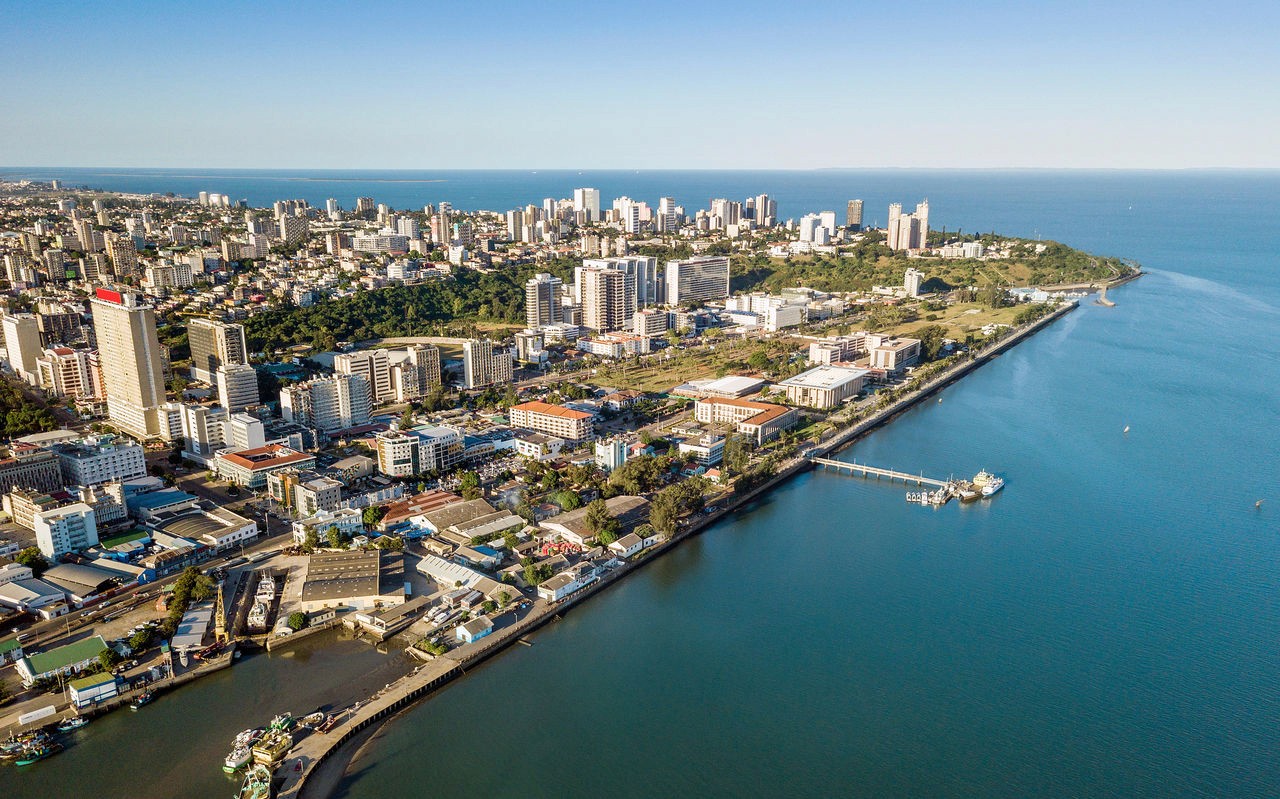

What You Need to Know
Mozambique is a long Indian Ocean coastal nation in Southeast Africa, known for its maritime heritage, natural gas reserves, and strategic trade corridors. Stretching more than 2,400 kilometers along the coast and bordering six countries, Mozambique links inland Southern Africa to global markets. Long shaped by trade, colonial legacies, and post-independence conflict, the country is working to translate resource wealth and regional connectivity into inclusive growth and stability.
Mozambique at a Glance
Capital: Maputo
Population: ~33–34 million
Official Language: Portuguese
Government: Presidential republic
Economy: Resource- and agriculture-led with growing services
Key Strengths: Natural gas, ports and corridors, long coastline
Regional Role: Indian Ocean gateway for Southern Africa
Why Mozambique Matters
Mozambique matters for its scale, location, and resources. With some of Africa’s largest offshore natural gas discoveries and deep-water ports serving landlocked neighbors, the country is central to regional energy, trade, and logistics. Its stability and policy choices will influence Southern Africa’s growth, energy security, and integration with global markets.
Geography and Location
Mozambique is located in Southeast Africa, bordered by Tanzania to the north; Malawi, Zambia, and Zimbabwe to the west; South Africa and Eswatini to the south; and the Indian Ocean to the east.
The country’s geography includes a broad coastal plain, river systems such as the Zambezi and Limpopo, inland plateaus, and fertile deltas. This diversity supports agriculture, fisheries, transport, and hydropower.
People and Society
Mozambique has a population of approximately 33–34 million people and is ethnically diverse, with Makua, Tsonga, Sena, Shona, and other communities contributing to cultural life.
Portuguese is the official language, while many local languages are widely spoken. Christianity and Islam are the dominant religions, often practiced alongside traditional beliefs. A youthful population and rapid urbanization are reshaping cities such as Maputo, Beira, and Nampula.
A Brief Historical Context
Mozambique’s coastline was a key node in Indian Ocean trade networks for centuries before Portuguese colonization in the late 15th century. The country remained under Portuguese rule until independence in 1975.
Independence was followed by a prolonged civil war that ended in 1992, leaving deep social and economic scars. Since then, Mozambique has pursued reconstruction and growth, punctuated by political tensions, natural disasters, and recent security challenges in the north.
Government and Politics
Mozambique is a presidential republic with a dominant-party system. Political competition exists, though governance has been shaped by centralized authority and periodic unrest.
Current priorities include improving security, strengthening institutions, and managing resource revenues transparently to support development.
Economy: Resources, Agriculture, and Corridors
Mozambique’s economy is driven by agriculture, extractives, and transport corridors. Agriculture employs most of the population, producing cassava, maize, sugar, cotton, and cashews.
Major economic drivers and priorities include:
Offshore natural gas development
Hydropower, notably the Cahora Bassa Dam
Ports, rail, and logistics corridors
Agriculture modernization and food security
Managing resource-led growth while expanding jobs and services remains a central challenge.
Trade, Diplomacy, and Regional Influence
Mozambique is a member of the Southern African Development Community (SADC) and plays a key role as a transit country for regional trade. Its ports—Maputo, Beira, and Nacala—serve landlocked neighbors and connect Southern Africa to Asian and Middle Eastern markets.
Tourism and Natural Heritage
Tourism in Mozambique is anchored by its beaches, islands, and marine biodiversity. The Bazaruto and Quirimbas archipelagos are known for coral reefs and eco-tourism, while Ilha de Moçambique is a UNESCO World Heritage Site reflecting the country’s layered history.
Tourism growth has been uneven but holds strong long-term potential.
Safety and Travel Considerations
Security conditions vary by region. Major cities and southern areas are generally accessible, while parts of the north face ongoing security challenges. Travelers are advised to follow official guidance and local updates closely.
Culture and Daily Life
Mozambican culture reflects African, Arab, and Portuguese influences, expressed through music, dance, cuisine, and festivals. Coastal culture and fishing traditions are especially prominent.
Daily life often centers on family, markets, agriculture, and informal trade, with strong community ties.
Sports and National Identity
Football is Mozambique’s most popular sport and a key source of national pride. Athletics and traditional games also contribute to community life and youth engagement.