
What You Need to Know
Egypt is one of Africa’s most influential nations, shaped by millennia of history and a pivotal geographic position linking Africa, the Middle East, and Europe. Anchored by the Nile River and controlling the Suez Canal—one of the world’s most important trade arteries—Egypt plays a central role in regional politics, security, and global commerce. Today, the country is navigating economic reform, population growth, and geopolitical pressures while remaining a cornerstone of North Africa and the Arab world.
Egypt at a Glance
Capital: Cairo
Population: ~112–115 million
Official Language: Arabic
Government: Presidential republic
Economy: Diversified, with energy, services, industry, and tourism
Key Strengths: Strategic location, Suez Canal, large domestic market, cultural influence
Regional Role: Political, economic, and security heavyweight in North Africa and the Middle East
Why Egypt Matters
Egypt’s importance is global. The Suez Canal connects the Mediterranean and Red Seas, making Egypt indispensable to international shipping and energy flows. With Africa’s third-largest population and one of its largest economies, Egypt’s stability and policy choices have far-reaching implications for regional security, migration, food supply, and global trade.
Geography and Location
Egypt is located in North Africa, bordered by the Mediterranean Sea to the north, Sudan to the south, Libya to the west, and Israel and the Gaza Strip to the northeast. The Sinai Peninsula extends into Asia, making Egypt a transcontinental state.
Although much of the country is desert, life is concentrated along the Nile River and its delta, which support agriculture, cities, and industry. This geography has shaped Egypt’s civilization for thousands of years and continues to define settlement patterns today.
People and Society
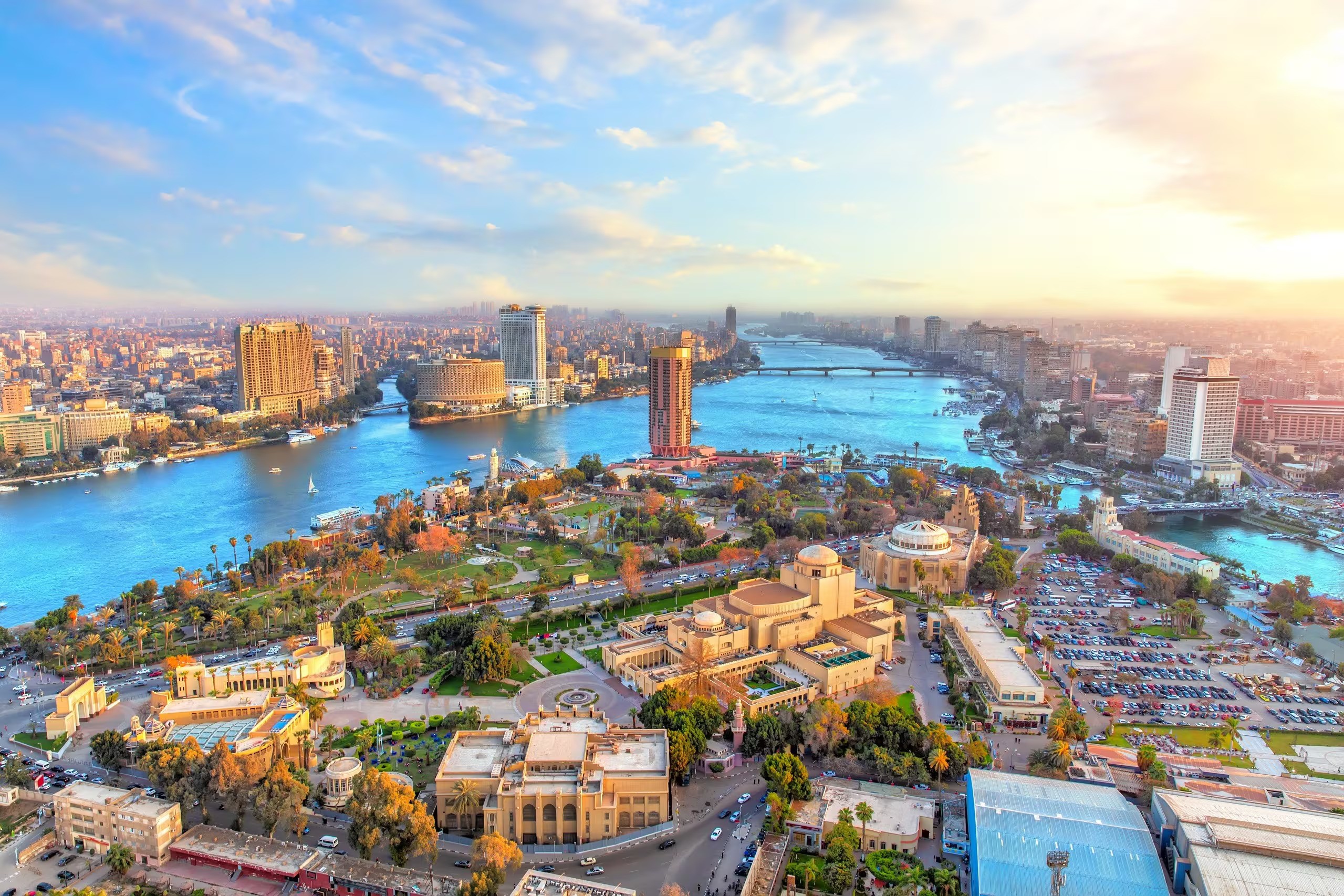
Egypt has a population exceeding 110 million people, making it one of the most populous countries in Africa and the Middle East. The population is heavily urbanized, with Cairo forming one of the world’s largest metropolitan areas.
Arabic is the official language, and Islam is the predominant religion, with a significant Christian minority, particularly the Coptic Orthodox community. Egyptian society is shaped by strong family networks, deep cultural traditions, and a dynamic urban culture.
A youthful population places pressure on jobs, housing, and services, while also offering long-term demographic potential.
A Brief Historical Context
Egypt is one of the world’s oldest continuous civilizations. Ancient Egypt left an enduring legacy of monumental architecture, governance, and culture that continues to shape global perceptions of Africa.
After centuries under Greek, Roman, and later Islamic rule, Egypt became part of the Ottoman Empire before falling under British control in the 19th century. The country gained full independence in the mid-20th century, emerging as a leader of Arab nationalism and African diplomacy.
Modern Egyptian history has been shaped by state-led development, regional leadership, and periods of political upheaval, including major transformations in the early 21st century.
Government and Politics
Egypt is a presidential republic with a strong executive branch and centralized governance. The state plays a significant role in the economy and public life.
Political stability, national security, and economic reform are core government priorities. Civic space and political participation remain constrained, with governance debates closely watched domestically and internationally.
Economy: Scale, Reform, and Resilience
Egypt has one of Africa’s most diversified economies. Key sectors include energy, manufacturing, construction, agriculture, services, and tourism. Natural gas production—particularly in the eastern Mediterranean—has strengthened Egypt’s role as a regional energy hub.
Economic priorities include:
Macroeconomic stabilization and reform
Infrastructure and mega-project development
Expanding manufacturing and exports
Managing food and energy security
A large domestic market and strategic location underpin Egypt’s economic resilience, even amid external shocks.
Trade, Diplomacy, and Regional Influence
Egypt is a leading diplomatic and security actor in Africa and the Middle East. It is an active member of the African Union, Arab League, and numerous regional initiatives.
The country plays a central role in Red Sea security, Mediterranean cooperation, and African development diplomacy. Control of the Suez Canal gives Egypt unique leverage in global trade and logistics.
Tourism and Cultural Heritage
Tourism is a cornerstone of Egypt’s economy. The country offers unparalleled cultural heritage, from the Pyramids of Giza and Luxor’s temples to Islamic and Coptic Cairo.
In addition to history, Egypt’s Red Sea coast attracts visitors for diving, resorts, and marine biodiversity. Tourism recovery and diversification remain key economic priorities.
Safety and Travel Considerations
Major cities and tourist destinations are generally accessible, though security measures are prominent. Travelers are advised to follow official guidance, remain aware of local conditions, and plan carefully when traveling outside established routes.
Culture and Daily Life
Egyptian culture is globally influential, particularly in film, music, literature, and media. Cairo has long served as a cultural capital of the Arab world.
Daily life is shaped by family, work, religion, and social interaction, with street life, markets, and cafés forming an essential part of urban culture.
Sports and National Identity
Football is Egypt’s most popular sport and a powerful symbol of national pride. The national team’s success has reinforced Egypt’s continental standing, while sports play an important role in youth culture and public life.