
What You Need to Know
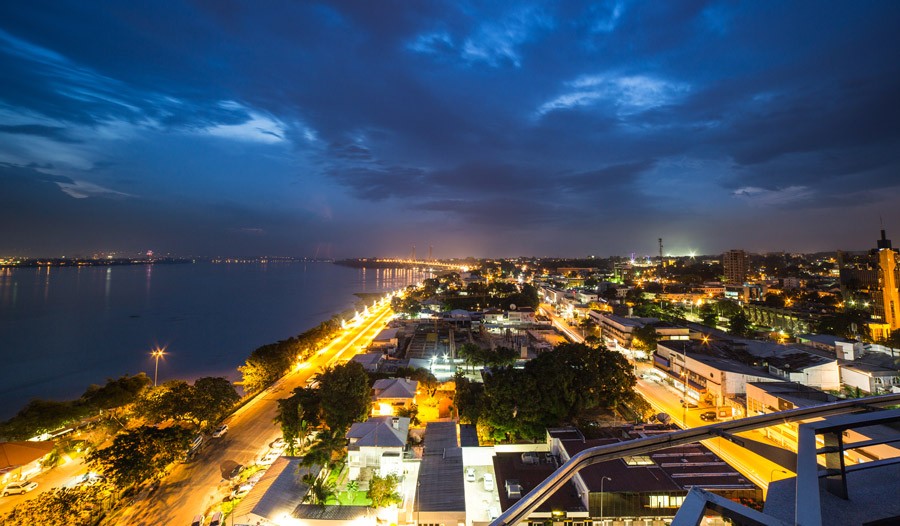
Republic of the Congo—often called Congo-Brazzaville—is a Central African nation defined by its Atlantic coastline, dense rainforests, and long-standing role as an oil producer. Bordering the Congo River across from Kinshasa, the country sits at the heart of Central Africa’s political and economic geography. Long shaped by hydrocarbons and a centralized state, Congo-Brazzaville is navigating economic diversification and governance pressures while maintaining regional relevance.
Republic of the Congo at a Glance
Capital: Brazzaville
Population: ~6.1–6.3 million
Official Language: French
Government: Presidential republic
Economy: Oil-led with limited diversification
Key Strengths: Oil and gas, Atlantic port access, forests
Regional Role: Central African coastal state and transport corridor
Why the Republic of the Congo Matters
Congo-Brazzaville matters because of its strategic location and energy role. With direct Atlantic access and proximity to the Democratic Republic of the Congo, it serves as a key transport and trade corridor in Central Africa. Its oil revenues shape regional energy dynamics, while its forests contribute to Congo Basin conservation and climate efforts.
Geography and Location
The Republic of the Congo is located in Central Africa, bordered by Gabon to the west, Cameroon and the Central African Republic to the north, the Democratic Republic of the Congo to the east and south, and the Atlantic Ocean to the southwest.
The country features coastal plains, vast rainforest regions, and river systems dominated by the Congo River. This geography supports forestry, agriculture, inland transport, and port activity centered around Pointe-Noire.
People and Society
The Republic of the Congo has a population of approximately 6.1–6.3 million people, with a high level of urbanization. Most citizens live in Brazzaville and Pointe-Noire.
Ethnic groups include the Kongo, Teke, Mbochi, and Sangha, among others. French is the official language, while Lingala and Kituba are widely spoken. Christianity is the predominant religion, often practiced alongside traditional beliefs.
Urban life is shaped by public-sector employment, informal markets, and strong community networks.
A Brief Historical Context
Before colonial rule, the region was home to established kingdoms and trade networks. France established colonial control in the late 19th century, incorporating the territory into French Equatorial Africa.
The Republic of the Congo gained independence in 1960. The post-independence period included political instability and a shift toward centralized rule, followed by periods of conflict in the 1990s.
Since the early 2000s, the country has experienced political continuity under a strong executive, supported by oil revenues that have stabilized state institutions but limited broader economic diversification.
Government and Politics
The Republic of the Congo is a presidential republic with a highly centralized executive branch. Political power has remained concentrated for decades, with limited political competition and constrained civic space.
Governance challenges include transparency, public financial management, and the need to strengthen institutions beyond the capital.
Economy: Oil, Ports, and Forestry
Congo-Brazzaville’s economy is dominated by oil and gas, which account for the majority of exports and government revenue. The country is also active in forestry, agriculture, and port services.
Economic priorities include:
Diversifying beyond hydrocarbons
Strengthening port and logistics services
Expanding agriculture and food security
Improving fiscal management and investment climate
The port of Pointe-Noire is a key asset for national and regional trade.
Trade, Diplomacy, and Regional Influence
The Republic of the Congo is a member of the Economic and Monetary Community of Central Africa (CEMAC) and the African Union. Its Atlantic access and transport links give it strategic importance for landlocked neighbors and regional integration.
The country participates in regional diplomacy and conservation initiatives linked to the Congo Basin.
Tourism and Natural Heritage
Tourism in Congo-Brazzaville is limited but holds eco-tourism potential. Odzala-Kokoua National Park is internationally recognized for its biodiversity and forest elephants.
Infrastructure and accessibility remain constraints, but conservation-based tourism is viewed as a long-term opportunity.
Safety and Travel Considerations
The Republic of the Congo is generally stable, particularly in urban areas. Infrastructure is strongest in Brazzaville and Pointe-Noire. Travelers should exercise normal caution and plan carefully when traveling to remote forest regions.
Culture and Daily Life
Congolese culture emphasizes music, storytelling, and community life. Urban culture in Brazzaville has long influenced Central African music and arts.
Daily life centers around family networks, markets, and public-sector employment, with informal economies playing a significant role.
Sports and National Identity
Football is the most popular sport in the Republic of the Congo and an important source of national pride. Domestic leagues and national teams contribute to social cohesion and youth engagement.