
What You Need to Know
Angola is one of Southern Africa’s most resource-rich nations and a major Atlantic-facing economy. With a long coastline, vast mineral reserves, and a youthful population, Angola occupies an important position in regional energy markets and Southern African geopolitics. Long shaped by oil wealth and a legacy of conflict, the country is now focused on economic reform, diversification, and deeper regional and global integration.
Angola at a Glance
Capital: Luanda
Population: ~35–36 million
Official Language: Portuguese
Government: Presidential republic
Economy: Oil-led with diversification underway
Key Strengths: Oil and gas, minerals, arable land, Atlantic access
Regional Role: Energy supplier and influential player in Southern Africa
Why Angola Matters
Angola’s natural resources, geographic scale, and Atlantic coastline give it strategic importance well beyond its borders. As one of Africa’s leading oil producers and a member of OPEC, Angola plays a significant role in global energy supply. At the same time, its efforts to diversify its economy and attract investment position it as a key test case for post-resource economic transformation in Africa.
Geography and Location
Angola is located on Africa’s southwestern coast, bordered by the Atlantic Ocean to the west and the Democratic Republic of the Congo, Zambia, and Namibia by land. The country also includes the Cabinda exclave, separated from the rest of Angola by a narrow strip of the Democratic Republic of the Congo.
Its geography ranges from fertile coastal plains and highland plateaus to semi-arid regions in the south. Rivers such as the Cuanza are central to agriculture and hydropower, while the Atlantic coastline supports trade, fisheries, and offshore energy production.
People and Society
Angola has a population of approximately 35–36 million, with one of the youngest demographic profiles in the region. The population is ethnically diverse, with several major groups, including Ovimbundu, Ambundu, and Bakongo communities.
Portuguese is the official language and widely spoken, while many Angolans also speak national anguages such as Umbundu, Kimbundu, and Kikongo. Christianity is the predominant religion and plays a central role in social and community life.
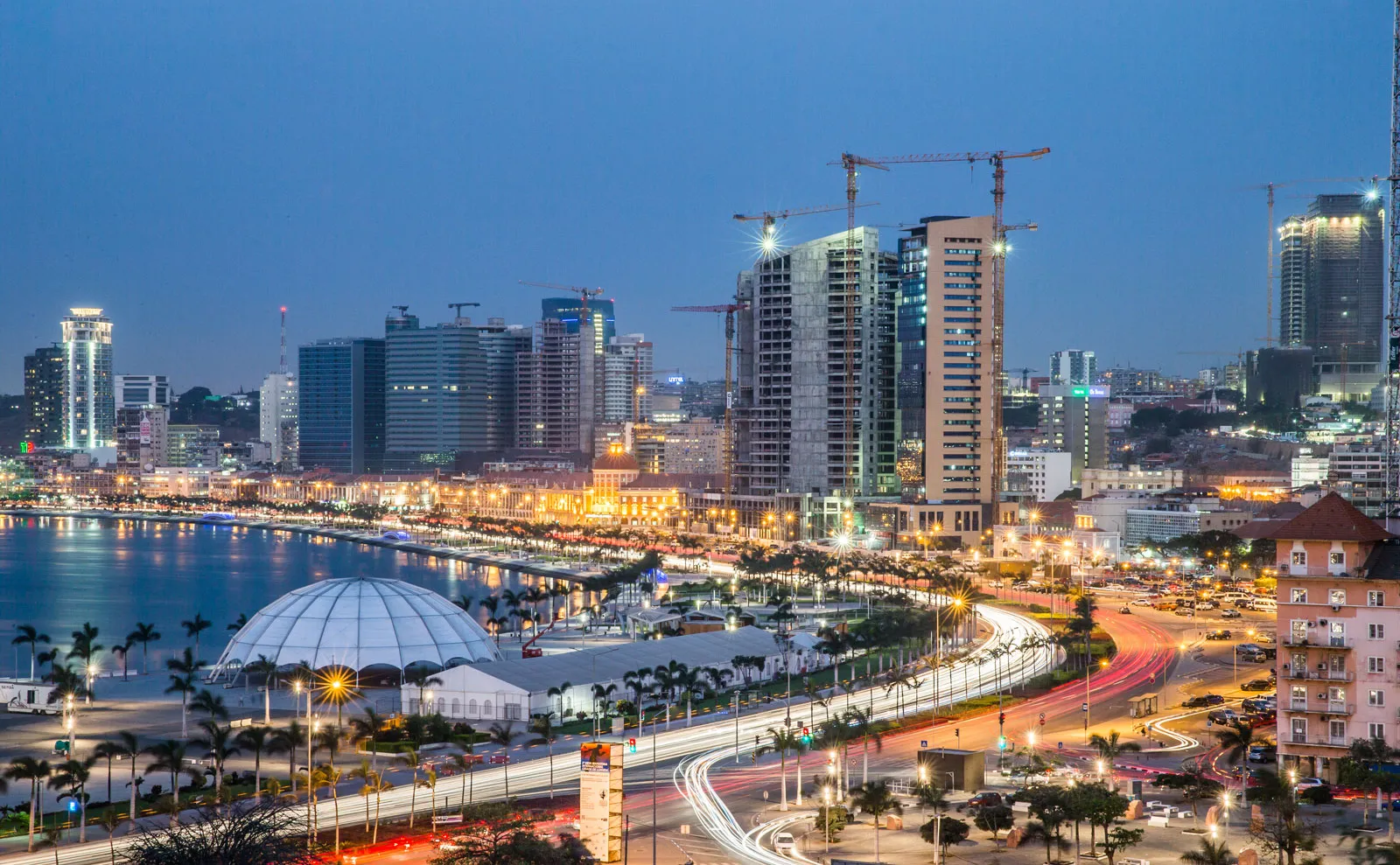
Rapid urbanization has transformed cities such as Luanda, creating both economic opportunity and pressure on housing, infrastructure, and public services.
A Brief Historical Context
Angola’s history includes powerful pre-colonial kingdoms and trading societies before becoming a Portuguese colony in the late 15th century. For centuries, Angola was deeply embedded in Atlantic trade networks, including the transatlantic slave trade.
The country gained independence from Portugal in 1975, but independence was followed almost immediately by a prolonged civil war that lasted until 2002. The conflict devastated infrastructure, displaced millions, and shaped Angola’s political and economic institutions.
Since the end of the war, Angola has focused on reconstruction and national consolidation, using oil revenues to rebuild roads, cities, and public services. The legacy of conflict continues to influence governance priorities and the country’s emphasis on stability.
Government and Politics
Angola is a presidential republic in which executive power is highly centralized. The president serves as both head of state and head of government, supported by a unicameral parliament.
Politics have historically been dominated by the ruling party since independence. In recent years, the government has pursued anti-corruption initiatives, public-sector reform, and efforts to strengthen institutions, while maintaining a strong emphasis on political stability.
Economy: Energy Powerhouse in Transition
Angola has one of Africa’s largest economies, driven primarily by oil and gas production. Oil accounts for the majority of export earnings and government revenue, making Angola highly sensitive to global energy price fluctuations.
To reduce this dependence, the government has prioritized diversification, with growing attention to:
Agriculture and agro-processing
Mining, including diamonds and critical minerals
Manufacturing and industrial development
Energy and infrastructure
Private-sector and SME growth
Economic reforms have focused on improving the business environment, stabilizing public finances, and attracting foreign investment.
Trade, Diplomacy, and Regional Influence
Angola is an active member of the Southern African Development Community (SADC), the African Union, and OPEC. It plays an important diplomatic and security role in Southern Africa, particularly in regional peace and stability efforts.
Its Atlantic ports and energy exports connect Angola to markets in Europe, the Americas, and Asia, reinforcing its global economic links.
Tourism: Untapped Natural Beauty
Angola remains an underexplored tourism destination, despite extraordinary natural assets. Highlights include Kalandula Falls—among Africa’s largest waterfalls—national parks such as Kissama, dramatic desert landscapes in Namibe, and a long, largely undeveloped coastline.
Tourism infrastructure is improving gradually, with growing interest in eco-tourism, adventure travel, and cultural tourism.
Safety and Travel Considerations
Security conditions are generally stable in major cities and tourist areas, though infrastructure and services can vary widely. Travelers are advised to exercise caution, particularly in remote regions, and to rely on local guidance and organized travel arrangements.
Culture and Daily Life
Angolan culture reflects a blend of African traditions and Portuguese influence. Music and dance—particularly genres such as kizomba and semba—are central to cultural expression and have gained international recognition.
Family and community life are deeply valued, and food, music, and celebration play an important role in everyday social interaction.
Sports and National Identity
Football is Angola’s most popular sport and a major source of national pride. The national team and domestic leagues play an important role in uniting Angolans and shaping national identity.